Pressure turns charcoal into diamonds. Ernest Hemingway defined true courage as grace under pressure. Pressure could be a weather front moving in from the west. And Pressure is a 2026 film about World War II.
Pressure examines the vital role of weather forecasting in the lead up to June 6, 1944 – D-Day. In June of 1944 the planners of Operation Overlord were holed up in Southwick House in Portsmouth, England considering their options for the timing of the cross-channel invasion of nazi-occupied Europe. These leaders included the irascible General Bernard Montgomery, played by Damian Lewis, who commanded Allied ground forces for the invasion. Across the English channel, lay Hitler’s fortified Atlantic Wall commanded by Erwin Rommel. This was a formidable collection of pill boxes, coastal guns, artillery, machine guns, mortars, bunkers and tank traps placed along the Nazi occupied coastline. The wreckage of Hitler’s Festung Europa (Fortress Europe) can be explored to this day.
Adding to the pressure faced around D-Day, was a disaster which occurred in April 1944 at Slapton Sands in Devon. On April 28, 1944, an Allied amphibious training exercise (Operation Tiger) was spotted and attacked with torpedoes by German E-boats. 749 Allied servicemen were killed, including some as a result of friendly fire. Their next of kin were not notified due to secrecy surrounding the Operation Overlord preparations. Pressure graphically depicts the sea running red with blood and reveals how this event weighed heavily on Eisenhower and other Allied leaders.
Eisenhower, the Supreme Allied commander, could not give the green light to the launch of Overlord until he had a clear picture of what kind of weather his troops would encounter on that fateful day. This is where Captain James Stagg (1900 – 1975), a Scottish RAF officer and Met Office meteorologist played an unsung but vital role. In Pressure he is played by the accomplished Irish actor Andrew Scott.
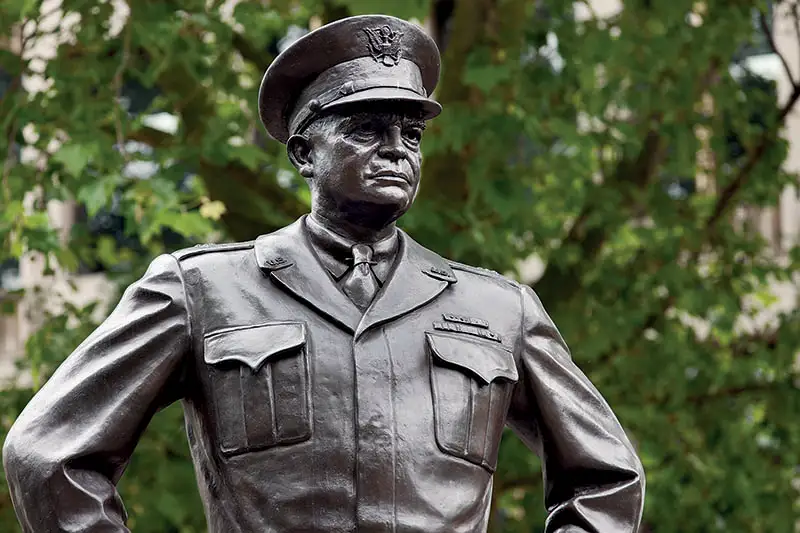
In the film, Captain Stagg spars with an American meteorologist Irving Krick (played by actor Chris Messina) who contended that historical weather data assured the Allies of mild weather conditions in early June.
German meteorologists, meanwhile, believed that stormy weather conditions precluded the possibility of an Allied invasion in early June. Based on this flawed intelligence, Rommel decided to return to Germany for his wife’s birthday causing him to miss out on the Allied landings. In January 1961 after JFK’s inauguration, the new president asked Ike what gave the Allies the edge on D-Day. He replied simply, “Because we had better meteorologists.” This Ike quote is used as the final and fitting message of Pressure.
By most accounts Dwight Eisenhower, portrayed by Canadian actor Brendan Fraser, was a bit of a mess in June of 1944. The West Point graduate from Abilene Kansas, whose parents were pacifists, was about to launch the largest amphibious invasion in World History. The responsibility for thousands of Allied lives and fate of the world seemed to rest on his shoulders. He was chain-smoking over four packs of unfiltered Camel cigarettes per day at the time. He was drinking around 15 cups of coffee per day. Consequently, he suffered from high blood pressure, migraines and insomnia. He had married Mamie Doud in 1916 and had two sons with her. But she remained on the other side of the Atlantic.
In May of 1942 Ike was assigned Kay Summersby, a 34 year old Irish divorcee, as his driver and secretary. They had a passionate war time relationship. One of the remarkable things about Pressure is its depiction of Ike’s relationship with Kay Summersby who is played ably by Kerry Condon. After the war Ike was forced to choose between his feelings for Kay and his political ambitions; naturally he chose politics. Kay was an old-fashioned mistress who remained silent and discrete in Ike’s lifetime. In the film Kay is an affectionate but professional source of support for Eisenhower. She was a critical adviser for Ike.
Meteorology in 1944 was very different from the high technology forecasting of today. It relied heavily on balloons, water temperature measurements and historical weather data.
Weather has always played a significant role in warfare. Rain on the evening of June 17, 1815 in Belgium made the ground muddy, delaying Napoleon’s attack the next morning at Waterloo with fatal consequences for the French Empire. During World War II poor weather in Northern Europe in December 1944 temporarily grounded Allied aviation allowing Hitler’s mad dream of a counterattack through the Ardennes – hence the Battle of the Bulge. One of the least well known campaigns of the war took place in frigid Greenland where German soldiers and engineers landed in order to erect weather radio stations to assist their U-boats operating in the north Atlantic. Allied forces destroyed these outposts and repelled the invaders.
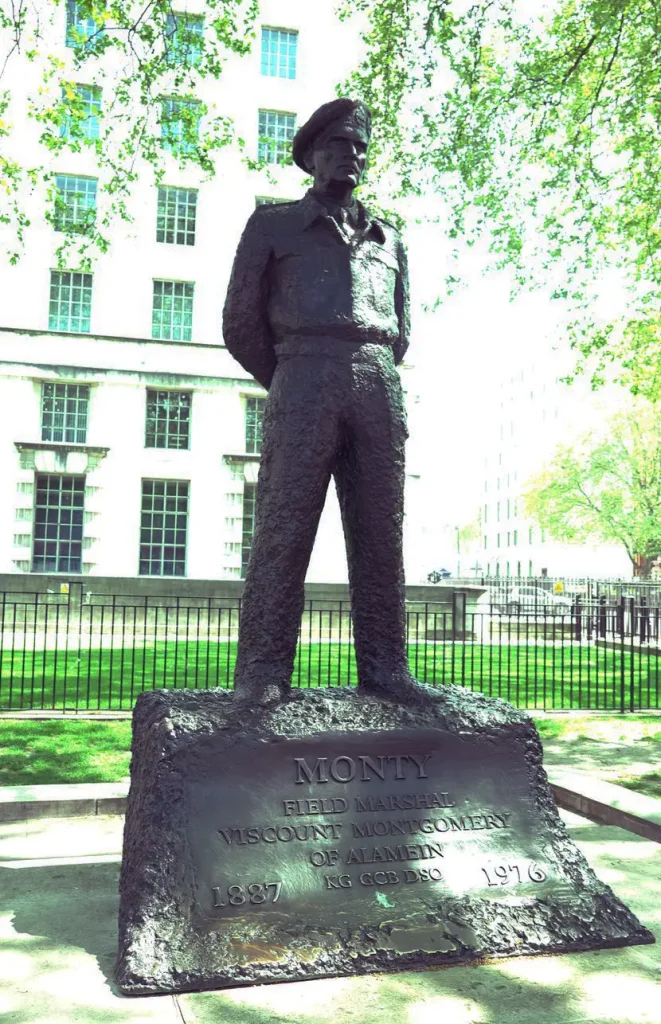
But the greatest weather story of World War II is undoubtedly that told in Pressure. Captain Stagg, who was Churchill’s favorite meteorologist at the time, prevailed upon Allied commanders (Including Ike and the formidable General Bernard Montgomery) to delay the projected launch date for D-Day by one day from 6/5/44 to 6/6/44. This seemingly small change made all the difference. A storm on 6/5 raised waves levels making an amphibious landing inadvisable. Stagg counselled Eisenhower that a weather window of opportunity would open on June 6 and Ike gave the green light and the rest is History. Stagg’s wife was pregnant and in hospital at the time of these deliberations. Meanwhile, thousands of people were being killed by German V-1 and V-2 rockets landing in England. On Sunday June 18, 1944, for example, a V-1 rocket struck the Guards chapel during a Sunday service in London killing 121 people.
Captain Stagg and Irving Krick were not the only Allied meteorologists playing a role in D-Day. Sverre Petterssen (1898 – 1974), a Norwegian meteorologist who is sadly unacknowledged in Pressure, also disagreed with Krick’s rosy predictions. His warnings along with those of Stagg seem to have given Ike pause about the timing of the D-Day landings.
Harry Geise (1920 – 1995) was the leading weatherman in my hometown of Sacramento, California during my boyhood. Geise was NOT involved with the D-Day deliberations. For many years he specialized in accurate long range weather forecasts. Many of the farmers in the Sacramento valley grew to depend upon his forecasts. He championed the latest technology in weather forecasting including Doppler radar among other innovations. Geise, like Stagg, had served in meteorology during World War II. Working for WLS radio in 1942, he did radio broadcasts that were intercepted by German U-Boats leading to shipping losses during the so-called “Happy Days” of the war in the Atlantic. In 1943 he enlisted in the US Marine Corps becoming a sergeant in the aerology department. My own father, Robert E. Kelly, had hired him in the mid-1960s as a weatherman for KCRA TV. Geise was certainly among my father’s proudest hires. KCRA’s motto was Where the News Comes First. Geise assured that KCRA offered the best most accurate weather forecasts in northern California for many years. Geise was a part of the cohort of heroic Allied weathermen who helped to win World War II.
Pressure is noteworthy for its fine cast, for its depiction of the Slapton Sands disaster and for its rare portrayal of the Ike / Kay Summersby relationship. Pressure is a remarkable study in True Courage.
